Recurring Deposit (RD) Calculator
Calculate RD maturity amount with quarterly compounding. Find total interest earned on your monthly deposits.
2 years
Compounded quarterly (standard for Indian bank RDs)
Maturity Amount
₹1,29,099
₹5,000/month × 24 months @ 7%
| Total Deposited | ₹1,20,000 |
| Interest Earned | ₹9,099 |
| Effective Annual Yield | 3.72% |
| Maturity Amount | ₹1,29,099 |
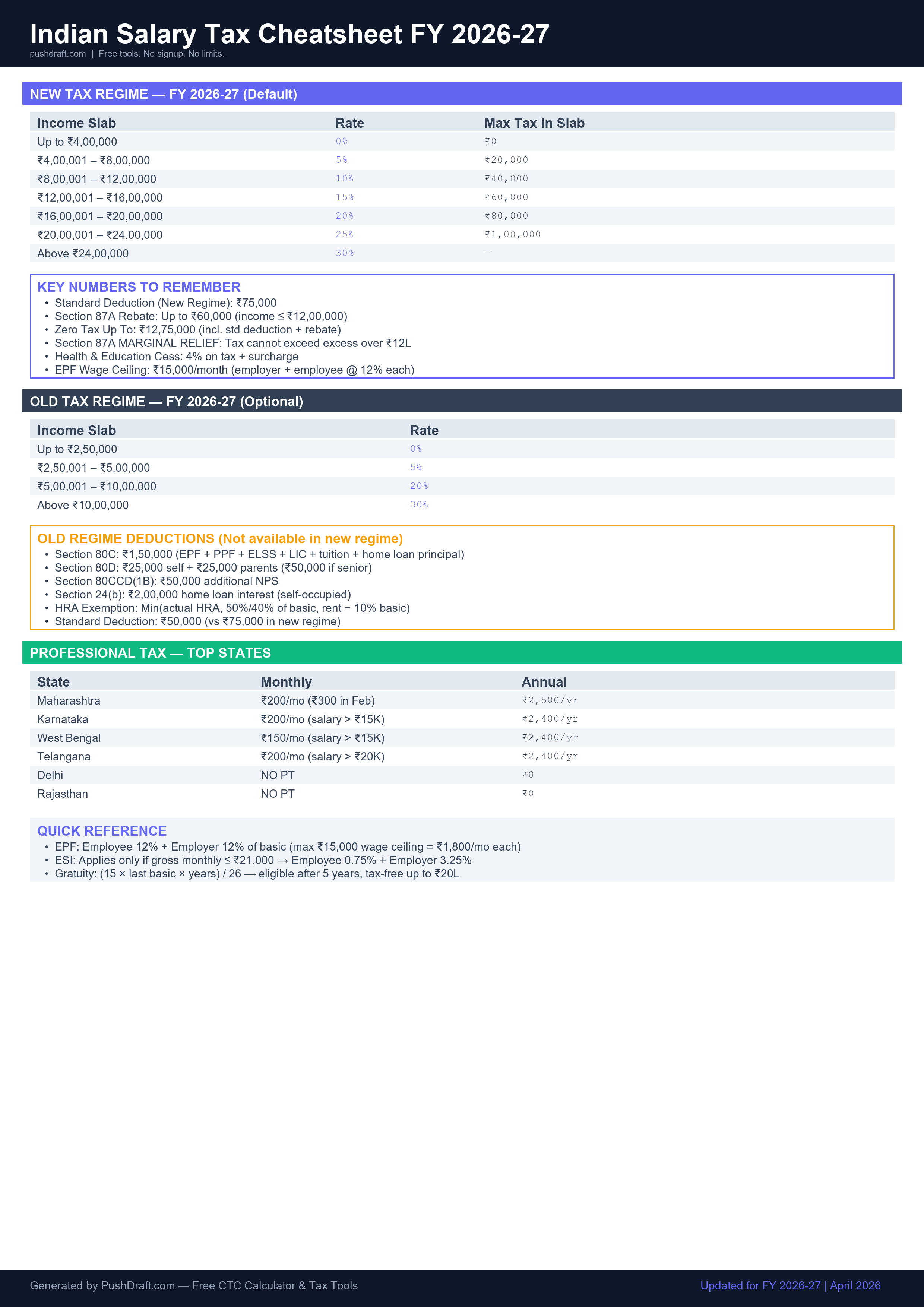
Free: Indian Salary Tax Cheatsheet 2026-27
New regime slabs, old regime deductions, PT by state — one page, print-ready.
How to Use RD Calculator
-
Enter monthly deposit
Enter the amount you will deposit every month.
-
Set tenure
Choose the deposit period in months, or use the preset buttons for common tenures.
-
Enter interest rate
Enter your bank's RD interest rate. Check your bank's current rates for accuracy.
-
View maturity amount
See the maturity value, total principal deposited, and interest earned.
Related Tools
Frequently Asked Questions
How is RD interest calculated?
RD interest is calculated using quarterly compounding. Each monthly instalment earns interest from the date of deposit until maturity. The formula accounts for the fact that each deposit has a different remaining tenure.
What is the difference between RD and FD?
In a Fixed Deposit (FD), you invest a lump sum once. In a Recurring Deposit (RD), you invest a fixed amount every month. RD is ideal for salaried individuals who want to save regularly, while FD suits those with a large corpus to invest upfront.
Is RD interest taxable?
Yes — RD interest is taxable as "Income from Other Sources" at your applicable slab rate. TDS at 10% is deducted if interest exceeds ₹50,000 in a financial year (₹1,00,000 for senior citizens).
What is the minimum RD amount in India?
Minimum monthly deposit varies by bank. SBI allows ₹100/month, HDFC and ICICI allow ₹500/month. Post Office RD minimum is ₹100/month.
PushDraft Weekly
Get weekly salary tips, tax updates, and new tools. Free, no spam, unsubscribe anytime.